The strategy that got there wasn’t revolutionary, but it was at odds with what most “AEO experts” are hawking.
Faster! Faster! More More More! With AI integrating into every aspect of content strategy and creation, leadership often buys into the notion that because you can output more and faster, you should.
While you should *absolutely* be using AI to enhance and expedite your workflow, quality shouldn’t be the tradeoff. And building 50 pages of new content a month isn’t necessary or advisable for a lot of companies.
For Restore Hyper Wellness, the number was eight. Eight pieces a month and in 90 days, organic blog traffic jumped 154% (from 10.8K to 27.5K clicks), impressions nearly tripled from 1.82M to 4.89M, and AI citations went from a handful to hundreds.
Here’s what that actually looked like in practice.
Content marketing results in 90 days starts with a strong strategy
Before a single piece was written, we did a full content and SEO strategy build-out. Competitor analysis, keyword gap analysis, deep audience alignment, and a content refresh audit to find which existing pieces were sitting on page two or three with quick-win potential.
A lot of the existing content was thin and outdated. Which is actually something I like to see when starting a process like this; it’s a huge opportunity. Pieces that had performed well according to their newsletter data, tied to search volume/AI queries, but contained thin content? Those were ones we knew we had to tackle immediately.
We mapped content pillars and clusters around their core service offerings (and tied them to seasonality). The idea was to create a system where ranking one piece would strengthen the next, building authority around each topic over time. This foundational work feels tedious at first, but it’s the cornerstone that allows us to move with precision once it’s completed.
The biggest unlock: building on subject matter expert authority
Restore’s Chief Science Officer, Dr. Rachele Pojednic, is already deeply credible in her field. Published research, conference appearances, and an established presence in the wellness and science community. That existing authority is something you can build around and piggyback on, if you are lucky enough to have it in-house.
When you have an SME like that to work with, you don’t always need to look for and hire writers with deep industry expertise. You need writers who are genuinely good storytellers (shout out to our amazing writer’s bench!). The SME holds the knowledge and shares their unique perspective. The brief does the translating. The writer makes it human and engaging.
SME’s can be busy, so the process needs to work for them and their schedule. Topics sent in advance, Loom interviews recorded and transcribed, best quotes and insights pulled directly into the briefs. Dr. Rachele was great off the cuff, so we had gold to work with right away. Those same conversations became scripts for YouTube videos that we’d embed in the finished articles and push across social.
One conversation atomized cross-channel. That’s what creates authority everywhere.
Using in-depth briefs to elevate content quality
I’ve refined our briefing process over my 10+ years in content, and this is an element that I think is chronically under-celebrated and under-executed for most companies. A lot of times, writers get a keyword and a rough outline and are left to figure out the rest.
Our briefs are different. AI helped speed up the research side, pulling relevant studies, surfacing internal links, and identifying the money pages worth highlighting. It helped us understand how to weave the expert insights in seamlessly, polish the quotes, and let the writer know exactly what to focus on and where.
The brief does the legwork so the humans can focus on what actually matters: making complicated topics uncomplicated, finding the right voice for the audience, and giving SME insights the context they deserve.
(PS. I’m planning to dive deep into our briefing process in a future issue — stay tuned.)
How to get cited by AI search without sounding like a robot
No great content strategy would be complete without a little (… or, well, a lot of) AEO strategy. Clear question-driven headers, concise definitions, visible author credentials, structured sections that surface answers directly. These can ALL be included and optimized for without ruining the content experience.
And I think it’s worth remembering: AI platforms don’t cite content just because it’s optimized. They cite it because it’s credible and clear.
By the end of the quarter, Restore was being cited 240 times in Google AI Overviews alone, up from 31. ChatGPT citations went from 33 to 215. Real traffic from LLMs. That’s what happens when the content is genuinely authoritative and structured optimally.
What the first 90 days actually looked like
The refreshed content pieces sitting on page two started climbing, some getting cited by AI within weeks. We were excited to see that time on page jumped — we consistently saw articles over 30 minutes on page. A piece about microdosing tirzepatide (a hot-button topic) drove nearly 9,000 sessions when distributed via their email newsletter. Newsletter engagement hit record highs, in general. These numbers were closely monitored so that we could gauge if people were, well, actually consuming and enjoying the content.
The cross-channel approach worked exactly as intended. In places where written content wasn’t showing up in AI Overviews, the YouTube video for that same topic was. It created that “everywhere authority” feeling that compounds over time.
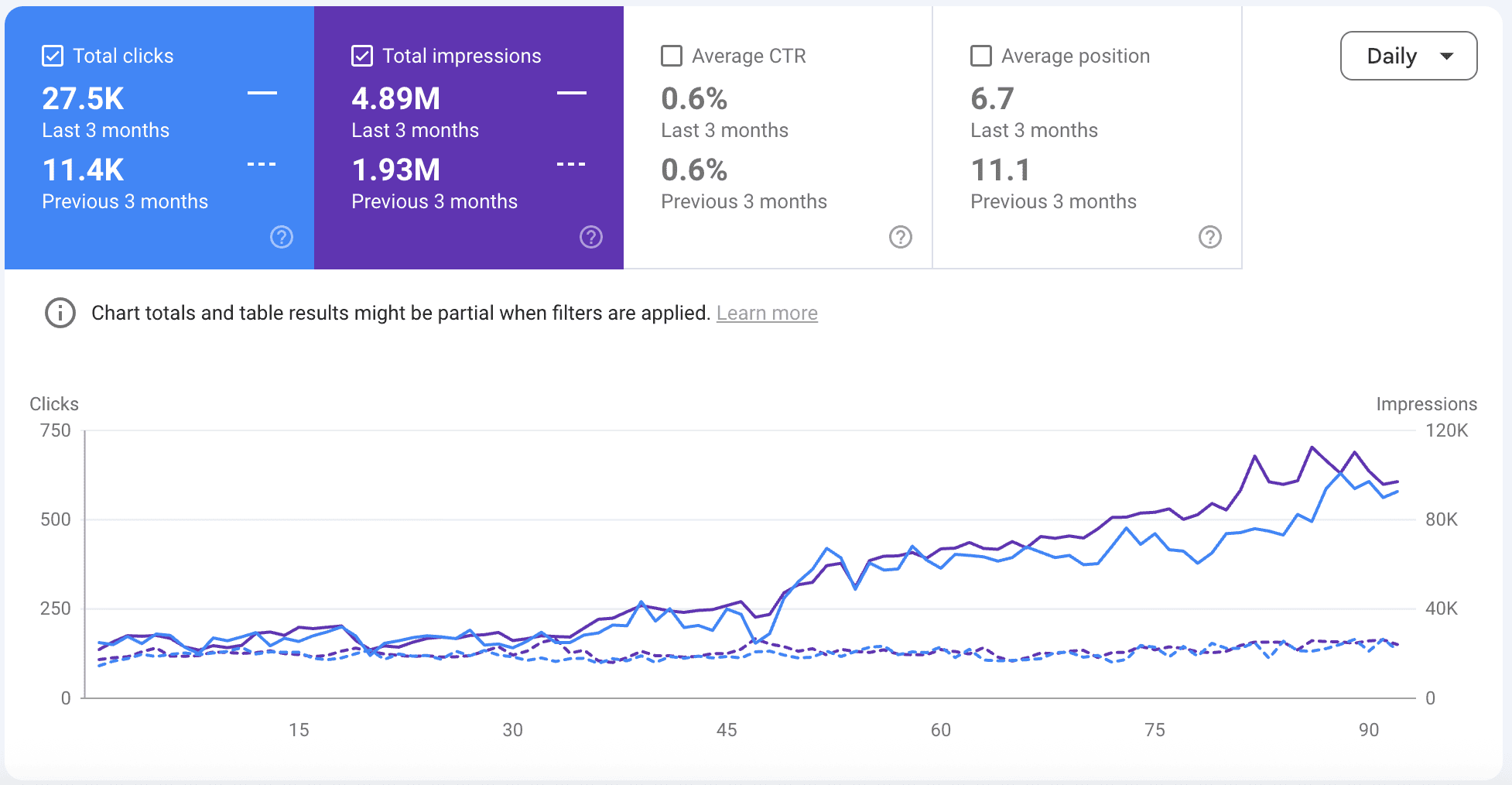
Content quality vs quantity in SEO
More content, faster. If it means churning out AI slop and creating more noise on the internet, it’s almost always the wrong instinct.
What actually compounds is a system: a real point of view, an expert worth building around, intentional operations, and content structured to earn citations (and, of course, rankings). More and more, I’m seeing these tried-and-true marketing strategies thrown by the wayside because they aren’t the new, hot thing. Basic is underrated when everyone else is cutting corners.
If you have a founder, practitioner, or internal expert with genuine credibility in your space, that’s your unfair advantage. Most brands aren’t using it anywhere near as much as they should.

Karli is content marketing consultant behind Wild Idea, a content marketing and SEO collective focused on driving big results. With over 12 years in the marketing industry, she’s worked with brands large and small across many industries to grow organic traffic and reach new audiences. She writes on everything from marketing, social, and SEO to travel and real estate. On the weekends, she loves to explore new places, enjoy the outdoors and have a glass or two of vino!